
Texas I-27 Implementation
Texas Leads the Way
Texas is leading the delivery of the I-27 Future Interstate system, which at 963 miles represents the largest and most developed segment of the Ports-to-Plains Corridor. Texas was the first state to secure detailed planning and legislative direction for I-27, laying the groundwork for corridor-wide advancement. Federal Future Interstate designation confirmed the route’s national significance, while passage of HB 1079 and SB 1474 directed Texas Department of Transportation to conduct the initial I-27 system study. That effort produced the I-27 implementation plan, defining system limits, phasing strategies, and project priorities across the state. Today, Texas continues to advance I-27 through coordinated planning, funding commitments, and ongoing TxDOT studies, establishing the system status, technical foundation, and delivery model that will guide expansion into neighboring states and completion of a continuous north–south Future Interstate corridor.
What Is Coming?
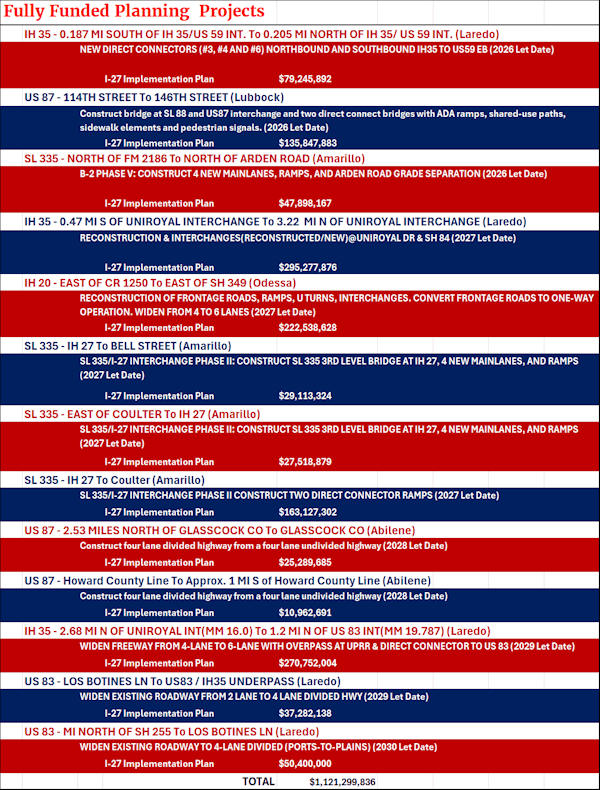
Texas has more than $1.12 billion in fully funded I-27 corridor projects scheduled for construction between 2026 and 2030. These investments will continue advancing the future Interstate system through Amarillo, Lubbock, Odessa, Abilene, and Laredo.
Planned improvements include widening existing highways, rebuilding frontage roads and interchanges, constructing new direct-connector ramps and grade separations, and upgrading rural two-lane highways to four-lane divided facilities. Major projects include continued development of Loop 335 and the I-27 interchange system in Amarillo, reconstruction of US 87 through Lubbock, additional I-20 improvements in Odessa, four-lane expansion of US 87 near Lamesa and Big Spring, and substantial upgrades to I-35 and US 83 in Laredo.
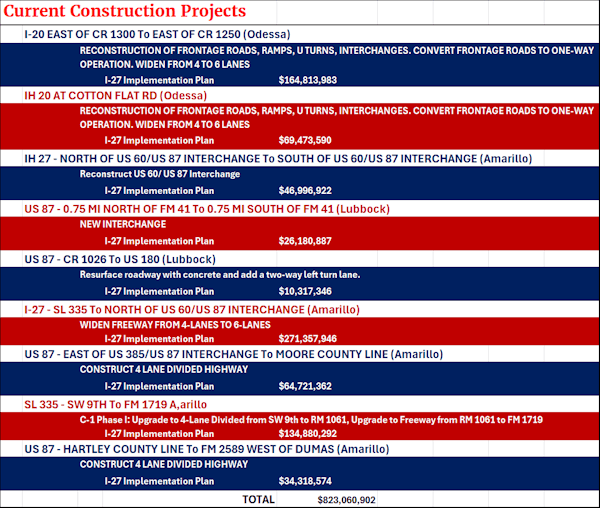
Together with approximately $823 million in projects already under construction, these investments represent nearly $1.95 billion in active and upcoming improvements supporting the I-27 System. The projects will improve safety, reduce congestion, strengthen freight movement, support border trade, and move key corridor segments closer to Interstate standards.

TxDOT Implementation Plan Status
The Texas Department of Transportation has completed a comprehensive, statewide planning effort to develop the I-27 Implementation Strategy, establishing the official framework for advancing the corridor to full Interstate standards. This strategy identifies how existing highways — including US 83, US277, US 87, US 287, and connecting segments — will be systematically upgraded to meet Interstate design, safety, and operational requirements. The plan outlines system limits, phasing, and project sequencing, providing a clear roadmap for long-term delivery. As the guiding document for I-27 development in Texas, the Implementation Strategy aligns planning, funding, and project development decisions across TxDOT districts, ensuring consistent progress and reinforcing Texas’s leadership role in completing the Future Interstate corridor.
Texas Unified Transportation Plan
Developed by the Texas Department of Transportation, the UTP establishes statewide priorities, allocates funding across program categories, and determines which projects advance from planning into construction. Inclusion in the UTP is critical, as it signals long-term commitment, funding eligibility, and implementation readiness. For corridors like I-27, the UTP ensures Future Interstate projects compete on equal footing, align with statewide mobility and safety goals, and receive predictable, phased investment. By anchoring I-27 projects in the UTP, Texas translates policy direction and legislative intent into actionable funding decisions that move the Future Interstate corridor toward full delivery and national connectivity.

The I-27 Advisory Committee
The I-27 Advisory Committee was established by Texas law through SB 1474 to provide structured, local leadership in advancing the I-27 Future Interstate system. The committee is composed of Mayors, County Judges, and Economic Development professionals representing the 26 counties along the I-27 route in Texas. Serving in an advisory capacity, the committee works closely with the Texas Department of Transportation to inform project prioritization, phasing, and implementation strategies. Equally important, the committee plays a central role in engaging local governments, businesses, and communities, ensuring corridor development reflects regional needs while supporting statewide transportation goals and the long-term delivery of a nationally significant Interstate corridor.
Corridor Segments & Investment
These projects represent only a spotlight on the types of projects included in the 2026 Texas UTP.
US 287 (Howard County)
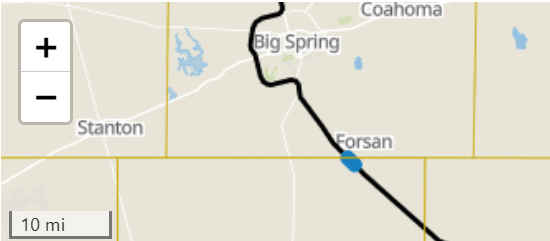
A key Future Interstate 27 improvement is advancing in Howard County along US 87 near Big Spring. TxDOT has an estimated cost of $21.6 million for widening the non-freeway segment from two miles north of Glasscock County to the county line, adding lanes and shoulders to improve safety and capacity. The project is scheduled for FY 2026–2029, with preliminary engineering underway and construction anticipated to begin in 2027. This investment reflects increased rural funding and directly supports I-27 readiness by upgrading a critical Ports-to-Plains corridor segment to interstate-compatible standards.
LP 335 (Randall County)
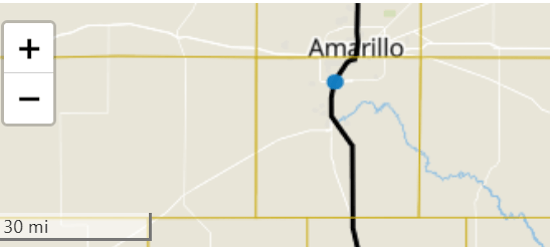
TxDOT is advancing Phase II of the SL 335 / I-27 Interchange, extending from I-27 to Bell Street in Amarillo. This new roadway construction project is programmed for FY 2026–2029 with a total investment of $29.1 million. The project is currently in the PS&E phase, with construction anticipated to begin by 2027. Loop 335 serves as Amarillo’s primary reliever route, providing a bypass that reduces congestion on I-27, improves freight mobility, and enhances safety by separating through-traffic from local travel. Phase II of the SL 335 / I-27 Interchange strengthens this reliever function by improving connectivity between I-27 and key urban corridors, supporting long-term operations and delivery of the I-27 Future Interstate System through the Amarillo region.
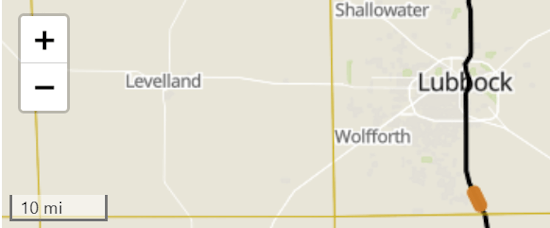
US 87 Interchange (Lubbock County)
TxDOT is advancing a new interchange on US 87 in Lubbock, extending from 0.75 miles north of FM 41 to 0.75 miles south of FM 41. The project is programmed for FY 2026–2029 with a total investment of $20.0 million and is designed to improve access, safety, and traffic operations along a critical segment of the I-27 / Ports-to-Plains Corridor. Construction is anticipated to begin within four years, with early delivery activities underway as part of TxDOT’s long-range planning efforts. This interchange strengthens system connectivity, supports growing traffic demands in the Lubbock area, and advances readiness for future interstate standards along the I-27 corridor. The project is under construction or begins soon.
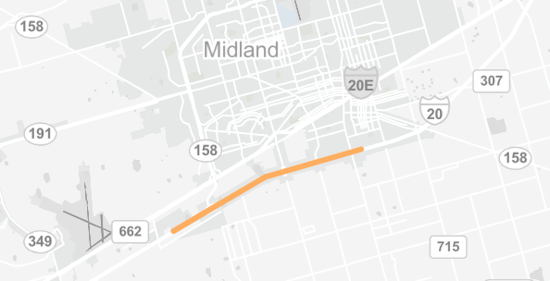
I-20 Widening (Midland County)
TxDOT is advancing a major widening project on I-20 from east of County Road 1250 to east of SH 349 in the Odessa–Midland area. Programmed for FY 2026–2029, the project represents a $222.5 million investment to add lanes and increase capacity along one of Texas’s most heavily traveled freight corridors. The project is currently in the PS&E phase, with construction anticipated to begin in 2027. This investment improves safety, reduces congestion, and strengthens connectivity between the Permian Basin, I-27, and national Interstate markets, supporting long-term future interstate and freight mobility goals.
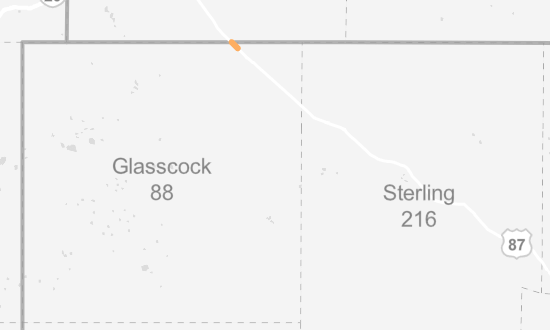
IH 35 Widening & Overpass Replacement (Webb County)
TxDOT is advancing a major IH 35 widening and overpass replacement project in north Laredo, extending from 2.68 miles north of the Uniroyal interchange (MM 16.0) to 1.2 miles north of the US 83 interchange (MM 19.674). Programmed for FY 2026–2029, the project represents a $270.8 million investment to widen the freeway to six lanes and replace aging overpasses. The project is currently in the PS&E phase, with construction anticipated to begin in 2026. This investment strengthens I-35 capacity at the nation’s largest inland port, improves safety and reliability, and enhances connectivity between I-27, the Ports-to-Plains Corridor, and international trade flows through Laredo.
Key Texas
State Funding
Texas is advancing the future I-27 System through sustained investment in the TxDOT Unified Transportation Program, the I-27 Implementation Plan, and statewide freight, safety, connectivity, and rural highway programs.
Current funding includes approximately $823 million in construction projects and more than $1.12 billion in fully funded projects scheduled to advance between 2026 and 2030—a combined investment of nearly $1.95 billion along the Texas corridor.
Key state-supported investments include:
- Widening highways from four lanes to six lanes in Amarillo, Odessa, and Laredo.
- Reconstructing frontage roads, ramps, interchanges, and direct connectors.
- Expanding rural sections of US 87 and US 83 from two lanes to four-lane divided highways.
- Advancing Loop 335 and I-27 interchange improvements in Amarillo.
- Reconstructing and modernizing US 87 through Lubbock.
- Improving I-20 corridor operations and frontage roads in the Odessa area.
- Expanding US 87 near Lamesa and Big Spring.
- Upgrading I-35 and US 83 connections in Laredo to improve border trade and freight movement.
These investments demonstrate Texas’ continued commitment to improving safety, supporting economic growth, strengthening international trade, and moving the I-27 System toward full Interstate standards.
Economic Benefits
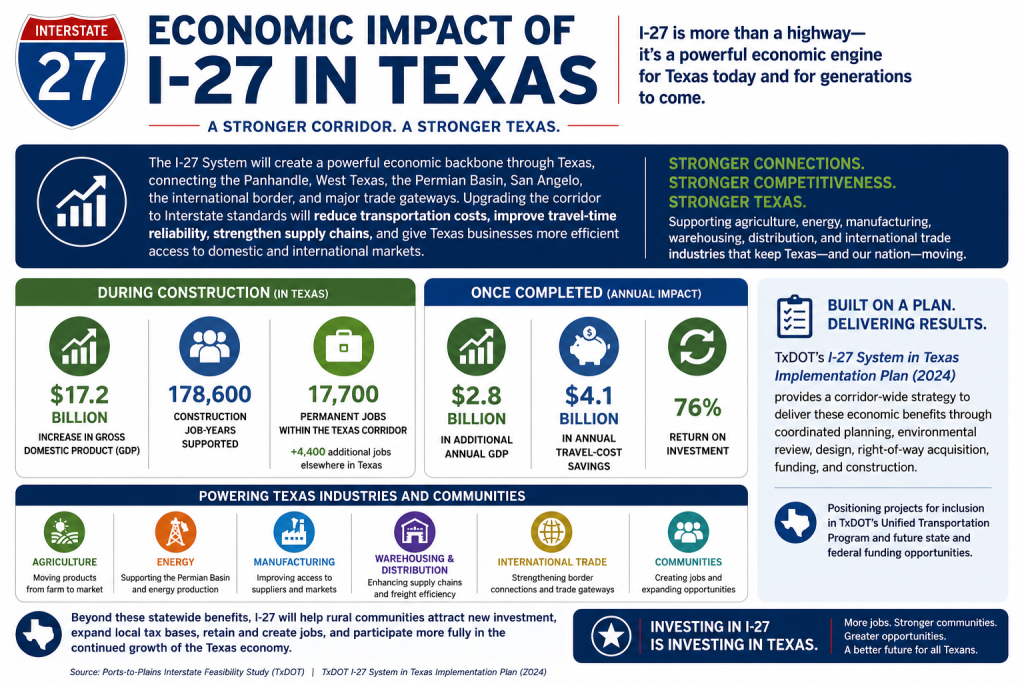
The development of the I-27 System would create a powerful new economic backbone through Texas, connecting the Panhandle, West Texas, the Permian Basin, San Angelo, the international border, and major trade gateways. Upgrading the corridor to Interstate standards would reduce transportation costs, improve travel-time reliability, strengthen supply chains, and provide Texas businesses with more efficient access to domestic and international markets. These improvements are especially important to the agriculture, energy, manufacturing, warehousing, distribution, and international trade industries that depend on the corridor to move products safely and competitively. The Ports-to-Plains Interstate Feasibility Study estimates that completing the corridor would increase Texas gross domestic product by approximately $17.2 billion during construction, support about 178,600 construction job-years, and generate approximately 17,700 permanent jobs within the Texas corridor, plus more than 4,400 additional jobs elsewhere in the state. Once completed, the Interstate is projected to produce approximately $2.8 billion in additional annual GDP and $4.1 billion in annual travel-cost savings, delivering an estimated 76 percent return on investment. Beyond these statewide benefits, I-27 would help rural communities attract new investment, expand local tax bases, retain and create jobs, and participate more fully in the continued growth of the Texas economy.
Support I-27 in Texas Legislature
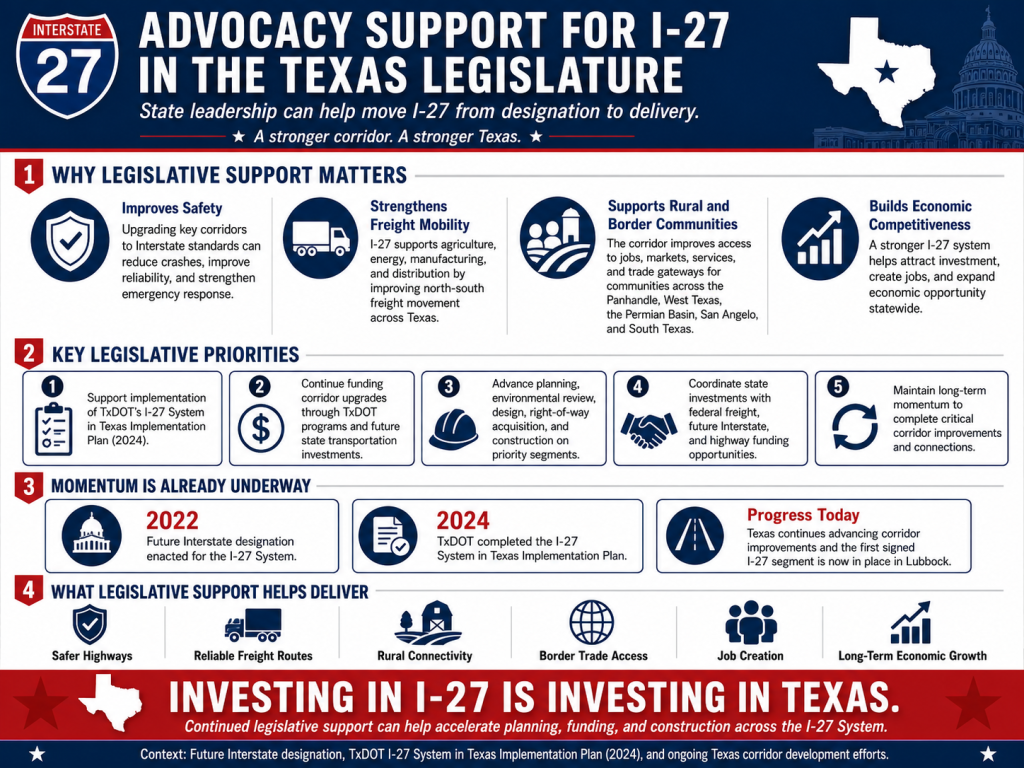
Now is the time to keep I-27 moving forward in Texas. Urge your state legislators to support continued I-27 funding and ask TxDOT to prioritize the corridor in the Unified Transportation Program (UTP). Sustained legislative support ensures planning, construction, and long-term delivery of this nationally significant Future Interstate.