March 2026 Volume 24 Issue 3
|
We are a voice for our small town, grassroots members who may otherwise not have access to the right audiences, as well as a conduit for industry to come together in support and promotion of transportation improvements.
We are committed to working as an Alliance to improve transportation infrastructure and business networks opportunities, by advocating for appropriate funding levels, so business and industry can thrive.
We are focused on the economic and business interests that are the lifeblood of the region.
|
Be Sure Newsletter Email is Allowed
|
As you may have noticed, the monthly Ports-to-Plains Newsletter is sent through our member database. Please be sure the email address pal@memberclicks-mail.net is allowed on your system.
|
As you know by now, we are in the last year of the current Surface Transportation Bill which is scheduled to sunset in September 2026. If you have been following our recent articles you will also know that we are working hard to get some legislation in the new bill that will again fund the construction of future interstates. Some form of these “highway bills” have existed since 1917, but the first one that set the pattern for bills to come was passed in 1956. That bill, of course, included the interstate construction program that was completed in 1992. Later, the highway bill of 1991, known as ISTEA, was in some ways transformative in the way we developed, constructed, and managed our national transportation system going forward. Every highway bill passed from 1991 on has had as its foundation the program requirements found in that bill.
Introduced in the 1991 bill included the consolidation of all of the federal aid highways into a National Highway System (NHS) and the Interstate System (IH) which is also a component of the NHS. This bill also created a new block grant type program known as the Surface Transportation Program (STP) which has become the backbone of every highway bill passed since. Included in the 1991 bill was a bridge and safety program that has carried forward even until today. In the 2012, we added a highway performance program, in 2015 we added a freight program, and in 2021 we added a whole slew of programs focusing on electric vehicles (NEVI) and infrastructure resiliency (PROTECT). The highway bill that was passed in 2021 (IIJA), included eight apportioned programs and relied heavily on discretionary grants to distribute a significant portion of the transportation funding. This bill was too broad in scope to effectively administrate.
|
The ISTEA bill of 1991 also had two other important features that are affecting us today as we try to draft a new bill. Transferability of funds was introduced in the Surface Transportation Program and later was included in the Highway Performance Program, the National Highway Freight Program, and the National Highway Safety Improvement Program. Your state DOT’s love this feature because it allows them to flex or move up to 50% of their program funds between programs with some limitations. The other important change that occurred in 1991 was the elimination of a dedicated interstate construction program. Created was an interstate maintenance category instead and fund flexibility was included there also.
I am telling you all of this stuff to get to the point of this article. When we drafted the Congressionally Authorized Future Interstate CAFI) language to be included in the upcoming highway bill, we tried to write it in a way that we could secure our DOT’s endorsement represented by the American Association of State Transportation Highway Officials (AASHTO). AASHTO’s core policy principles for reauthorization are as follows; 1. Prioritize formula-based federal funding to the states; 2. Improve project delivery, and reduce program burdens, and 3. Create a more safe, resilient, and efficient future by supporting state DOT’s ability to harness innovation and technology. Every part of this we can support and encourage. But there is one part of our CAFI program that is going to have to be different. You see, AASHTO’s core reauthorization policies are caught up in what I am calling the ISTEA paradigm. All of these recommendations are dependent within the program guidelines of the 1991 highway bill. And if you recall that bill ended the interstate construction program that had a dedicated funding source to build and complete the interstate highways. Our CAFI proposal seeks to do just that. Create a dedicated funding stream that is formula based but not subject to transferability and not dependent upon the discretionary grant program which no one wants, including DOT’s. We are asking AASHTO, our congressional delegations and everyone involved to accept this paradigm shift. If we don’t make it so, we will continue to piecemeal the completion of our future interstate system. You know, I enjoy doing this job of advocating, but realize it would still take 30 years to build out our future interstate even with dedicated funding. So it’s not like I am going to run out of something to do. But if we can get this CAFI program across the goal line, I will be happy to work on something else. Something Big!
more to come …
Lauren D. Garduño
|
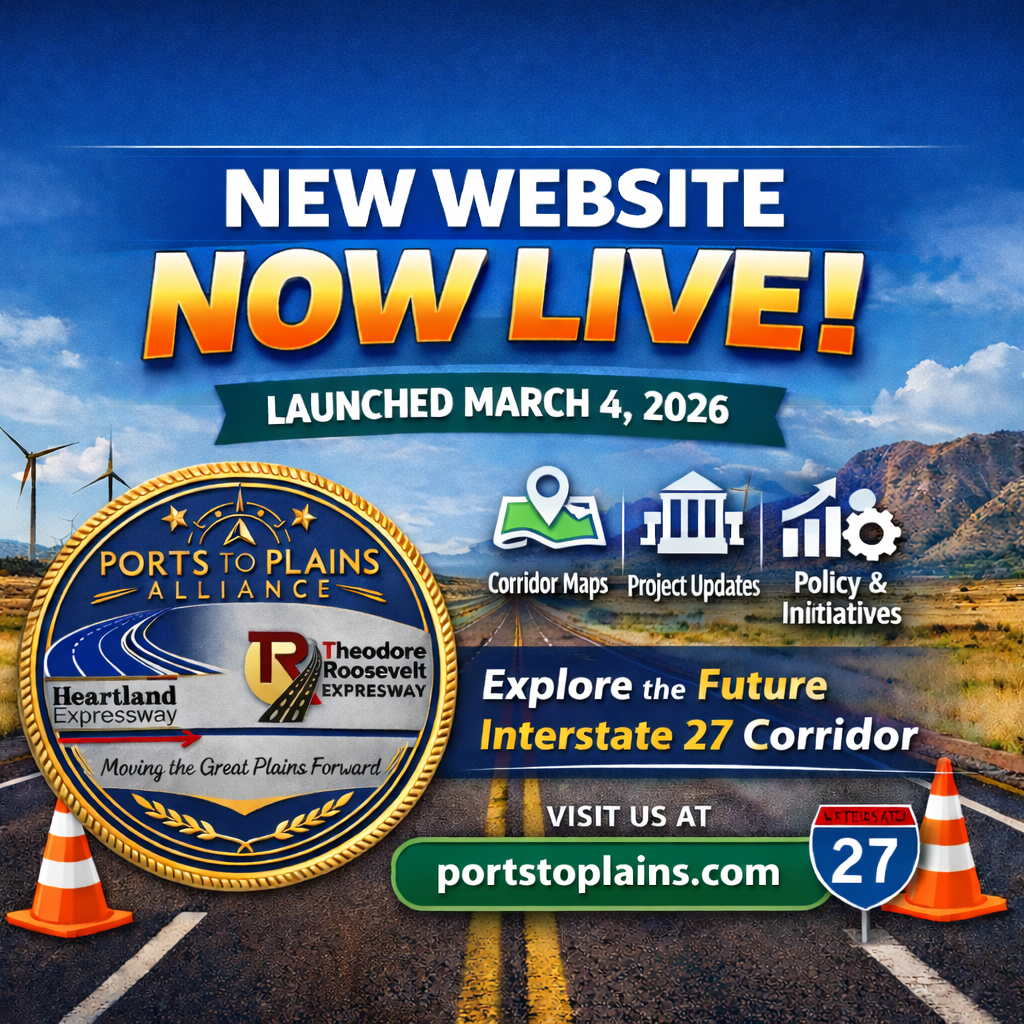
We’re Live! The New Ports-to-Plains Alliance Website Has Launched On March 4, 2026, the Ports-to-Plains Alliance launched its newly redesigned website, providing a more modern platform to showcase the progress of the Ports-to-Plains Corridor and Future Interstate 27 system.
The new site makes it easier to explore:
• Corridor maps and project updates across the nine-state region • Federal and state policy initiatives advancing the Future Interstate System • Economic development, freight mobility, agriculture, and energy impacts • Upcoming events, advocacy efforts, and membership opportunities The redesigned website reflects the Alliance’s ongoing work to advance a safe, efficient, and nationally significant transportation corridor connecting the United States, Mexico, and Canada.
🔗 Visit the new site: https://www.portstoplains.com/
#PortstoPlains #HeartlandExpressway #TheodoreRooseveltExpressway #FutureInterstate #I27 #Infrastructure #FreightMobility #EconomicDevelopment #RebuildRural
|
|
|
2026 Washington, DC Fly-In Delivers Strong Federal Engagement
|
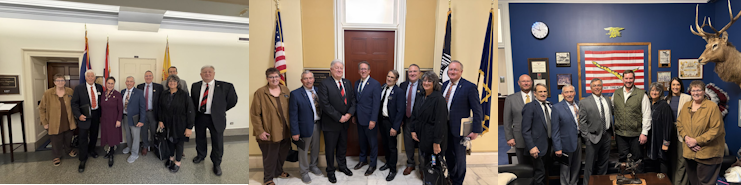
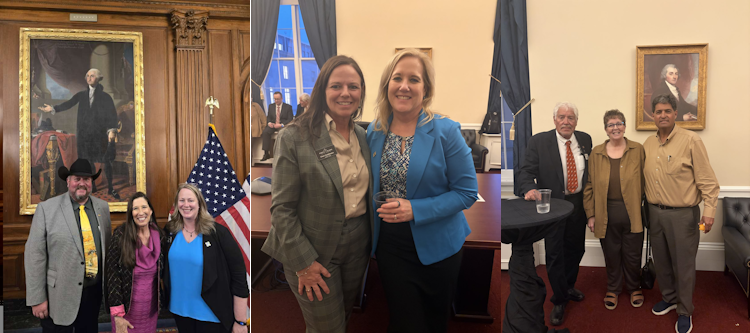
It was a standout year for the Ports-to-Plains Alliance during the Washington, DC Fly-In held March 2–5, 2026, as participants advanced the boldest federal policy requests in the Alliance’s history. A delegation of 29 Alliance members traveled to Washington, representing communities, businesses, and partners from across the nine-state corridor. Together, they conducted an impressive 26 congressional office visits, including: - 12 meetings with U.S. House offices
- 14 meetings with U.S. Senate offices
These meetings focused on advancing key priorities tied to the upcoming surface transportation reauthorization, including multi-state interstate funding, corridor designation, and long-term infrastructure investment. In addition to congressional engagement, participants strengthened relationships across the federal landscape by taking part in several high-value events and agency meetings. Attendees joined the well-attended Nebraska Breakfast and participated in a Legislative Reception with members of Congress and staff, further elevating the Alliance’s visibility on Capitol Hill. The delegation also met directly with federal agencies, including the Federal Highway Administration (FHWA) and the U.S. Department of Commerce – International Trade Administration (ITA), reinforcing the Corridor’s importance to national transportation, trade, and economic policy.
The 2026 Fly-In demonstrated the strength of a unified, multi-state voice and positioned the Ports-to-Plains Alliance for continued success as Congress prepares the next surface transportation authorization.
What Was Accomplished?
The 2026 Washington, DC Fly-In successfully converted multi-state advocacy into federal funding, secured full congressional engagement across the corridor, and positioned Ports-to-Plains as a national priority in the upcoming surface transportation reauthorization.
Secured Federal Funding Momentum
The Alliance thanked members of Congress for their support that resulted in: - $19.24 million in FY 2026 federal funding for Ports-to-Plains corridor projects
- Provided personal input on the FY 2027 appropriations process
- Reinforced the importance of:
- Congressionally Directed Spending (CPF)
- Interstate planning funds
- Early-stage project development
Bottom line: The Fly-In translated advocacy into real dollars.
Advanced 2026 Transportation Reauthorization Priorities - Participants met with congressional offices to push core policy goals:
- Multi-State Future Interstate Highway Formula Program
- Future Interstate Feasibility Study (multi-state)
- Designation & Route Numbering expansion
- This builds directly on prior Fly-Ins where reauthorization was a central topic .
Bottom line: Positioned Ports-to-Plains as a national solution in the next highway bill.
Achieved Full Congressional Engagement Across the Corridor - Following the established Fly-In model:
- Meetings targeted every House office along the corridor
- Meetings included all Senate offices in corridor states
- These meetings consistently focused on:
- Food, fuel, and fiber supply chains
- Rural infrastructure funding
- Interstate designation progress
- State-specific project needs
Bottom line: Ensured complete delegation coverage across 9 states.
Unified a Multi-State Coalition on a Single Federal Message - The Fly-In brought together:
- Local elected officials
- Economic development leaders
- Industry partners (energy, engineering, etc.)
- Corridor associations (Heartland Expressway, TR Expressway)
- Outcome:
- Delivered a consistent, coordinated message across all meetings
- Demonstrated broad grassroots + industry support
Bottom line: Strengthened credibility—this is not a single-state ask.
Elevated the Corridor as a National Trade & Security Asset - In meetings, the Alliance emphasized:
- Agriculture (food supply chains)
- Energy (Permian to Bakken connectivity)
- International trade (USMCA corridors)
- Tourism
- Defense & strategic mobility
- These themes were core talking points in prior Fly-Ins .
Bottom line: Reframed Ports-to-Plains from a “road project” to a ational economic and security corridor.
Reinforced Project Readiness & Progress - The Fly-In highlighted:
- I-27 expansion progress and signage milestones
- Ongoing state DOT planning and construction
- Outcome: Showed Congress this is a ready-to-deliver project, not conceptual
Bottom line: Made it easier for offices to justify funding support.
U.S. House of Representatives Meetings
Colorado (CO) - Representative Lauren Boebert (CO-4)
Montana (MT) - Representative Ryan Zinke (MT-1)
Nebraska (NE) - Representative Adrian Smith (NE-3)
New Mexico (NM) - Representative Teresa Leger Fernandez (NM-3)
North Dakota (ND) - Representative Julie Fedorchak (ND)
Oklahoma (OK) - Representative Frank Lucas (OK-3)
Texas (TX) - Representative Jodey Arrington (TX-19)
- Representative Henry Cuellar (TX-28)
- Representative Tony Gonzalez (TX-23)
- Representative Ronny Jackson (TX-13)
- Representative August Pfluger (TX-11)
Wyoming (WY) - Representative Harriet Hageman (WY)
U.S. Senate Meetings
Colorado (CO) - Senator Michael Bennet (CO)
Montana (MT) - Senator Steve Daines (MT)
Nebraska (NE) - Senator Deb Fischer (NE)
- Senator Pete Ricketts (NE)
New Mexico (NM) - Senator Martin Heinrich (NM)
- Senator Ben Ray Luján (NM)
North Dakota (ND) - Senator Kevin Cramer (ND)
- Senator John Hoeven (ND)
Oklahoma (OK) - Senator James Lankford (OK)
- Senator Markwayne Mullin (OK)
South Dakota (SD) - Senator Mike Rounds (SD)
- Senator John Thune (SD)
Texas (TX) - Senator John Cornyn (TX)
- Senator Ted Cruz (TX)
Representing Ports-to-Plains Alliance
Colorado (CO) - Mike Duffy — Account Manager | KLMR AM/FM | City of Lamar, CO
Indiana (IN) - Kent Moore — Vice President, Partner, Executive | American Structurepoint
Nebraska (NE) - Deb Cottier — Ports-to-Plains Board Member | Chair, Heartland Expressway Association
- Rich Flores — County Board Chairman and Commissioner | Kimball County
- Greg Robinson — City Council Member, City of Kimball
- Jerry Stricker — City Council Member, City of Scottsbluff
North Dakota (ND) - Josh Demorrett — Director, State Government Affairs at ConocoPhillips
- Cal Klewin — Executive Director, Theodore Roosevelt Expressway Association
- Philip Riely — Mayor, City of Watford City
- Chelsea Ulzomi — City Commission, City of Watford City
New Mexico (NM) - Justin Bennett – Ports-to-Plains Board Member | County Commissioner, Union County, NM
- Lori Chatterley — Ports-to-Plains Board Member | Mayor, City of Raton
Texas (TX) - John Burkholder — City Council, City of Midland
- Mona Ferguson — Executive Director, Lamesa EDC
- Valeria Flores — Public Relations, City of Eagle Pass
- Lauren Garduño — President/CEO, Ports-to-Plains Alliance
- Cheri Huddleston — Legislative Consultant, Hance Scarborough LLP, Austin
- Patricia Mancha — Port AGM, City of Eagle Pass
- Jose Ortiz — Deputy City Manager, City of Midland
- John Osborne — Chair, Ports-to-Plains Alliance | President/CEO, Lubbock EDA
- Tina Scarborough — Business Manager, Ports-to-Plains Alliance
- Venky Shankar — CECE - Transportation Engineering, Texas Tech University
- Raymon “Craig” Stoker — City Council, City of Odessa
- Brian Stubbs — City Council, City of Midland
- Wendy Travis — Southwest Region Director, Transportation, Garver
- Kevin Young — Managing Principal, Central Texas, Pape-Dawson
Wisconsin (WI) - Bob Cook — Government Relations Director, Garver
Washington, DC - David Pore — Partner, Hance Scarborough LLP
- Mike Tomberlin -- Senior Policy Advisor, Hance Scarborough, LLP
|
2027 – 2030 Rural Transportation Improvement Program Amarillo District - virtual public meeting
|
Location: Amarillo
Date: 05/16/26
Purpose: The TxDOT Amarillo District will conduct an online virtual public meeting for the proposed 2027 – 2030 Rural Transportation Improvement Program (RTIP). The purpose of this meeting is to provide information and receive comments on which transportation projects may be coming to your area. The Amarillo District includes Armstrong, Carson, Dallam, Deaf Smith, Gray, Hansford, Hartley, Hemphill, Lipscomb, Moore, Ochiltree, Oldham, Potter, Randall, Roberts, and Sherman counties.
The virtual public meeting will be available on this webpage by 9 a.m. CT Monday, April 13, 2026, and remain online through 11:59 p.m. CT, Monday, April 27, 2026.
Public comment deadline: Comments must be postmarked or otherwise received by Monday, April 27, 2026, to be included in the official public meeting record.
|
Save the Date: 2026 Ports-to-Plains Annual Conference
|
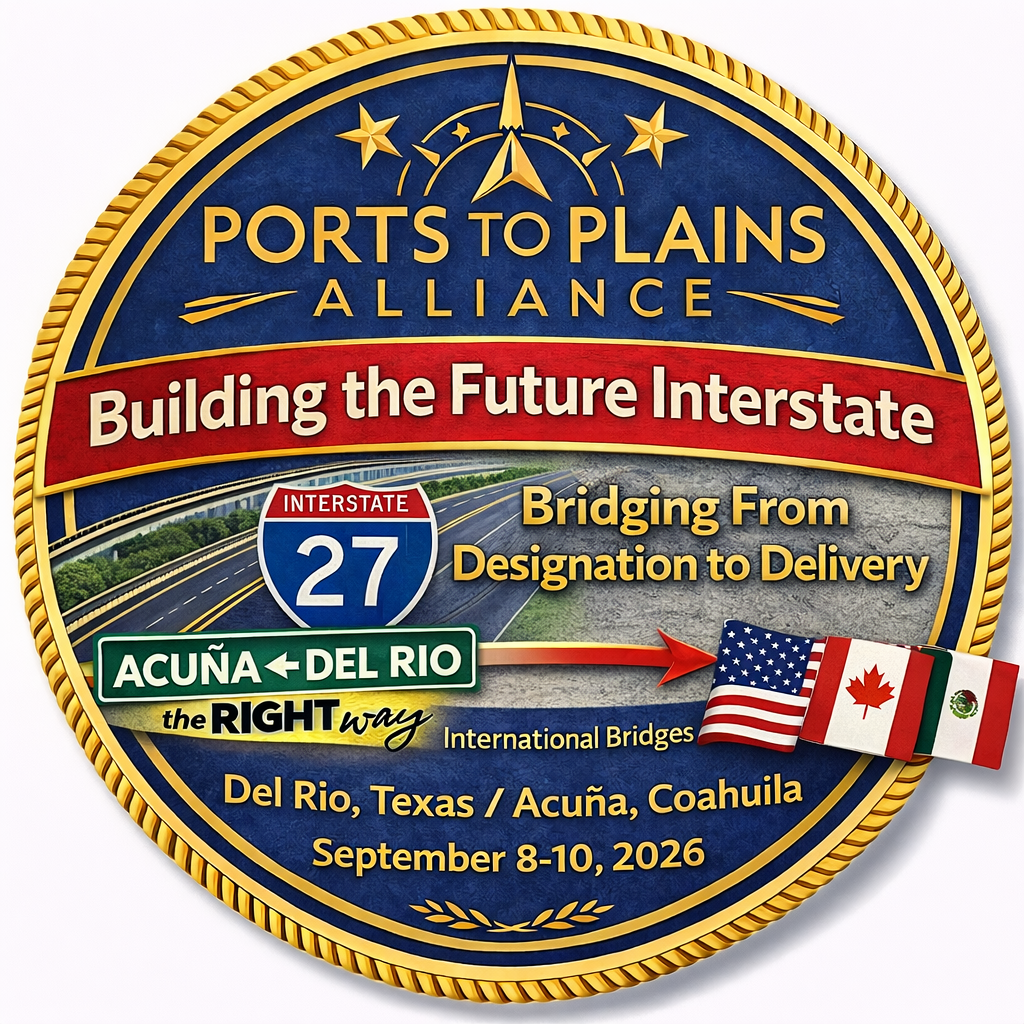
Join us September 8–10, 2026 in Del Rio, Texas and Acuña, Coahuila for the Ports-to-Plains Alliance Annual Conference.
This year’s theme:
Building the Future Interstate: Bridging from Designation to Delivery
Be part of a binational conversation advancing policy, funding, and project delivery for the Future Interstate Corridor. 👉 Learn more and plan your trip: ttps://www.portstoplains.com/events/annual-conference/
|
In 2018, the theme was United We Build.
|
Now in 2026, the focus shifts squarely to implementation with this year’s theme: Building the Future Interstate: Bridging from Designation to Delivery
|
Join us as we bring together federal, state, and local leaders to advance the next phase of the Future Interstate Corridor.
Mark your calendars now and plan to be part of this milestone event.
|
Local to Global Forum, April 8-10, 2026
|
The Local to Global Forum brings together everyone interested in driving economic development for Eastern Alberta Municipalities.
The Local to Global Forum provides elected officials, service providers, economic development professionals, and community members the opportunity to network and discuss strategies to diversify and grow rural economies in Eastern Alberta. Invitations have been extended to Minister Dreeshen, Transportation/Economic Corridors, & Irrigation and Minister Neudorf, Affordability & Utilities. Other speakers include the Honorable Shane Getson Parliamentary Secretary Economic Corridors and Nathan Cooper, Alberta’s Senior Representative to the U.S. Other topics include the Electricity Landscape with presentations from AESO and AltaLink. Lauren Garduno, President/CEO of the Ports-to-Plains Alliance will present on Thursday, April 9, 2026.
Link to Local to Global Forum
|
I-27 Advisory Committee Meeting in Big Spring, Texas
|
This is a Save the Date for the next I-27 Advisory Committee Meeting scheduled for Thursday, April 9, 2026, from 9:00 a.m. to 11:30 a.m. in Big Spring, Texas. The meeting will be held at Hotel Settles, 200 East Third Street, Big Spring, Texas 79720. If you can only participate virtually, a Teams link is included below.
|
What: I-27 Advisory Committee Meeting Date: Thursday, April 9, 2026 Time: 9:00 a.m. – 11:30 a.m. (Networking from 8:30 a.m. to 9:00 a.m.) CT Location: Hotel Settles 200 East Third Street Big Spring, TX 79720 Teams Link: https://bit.ly/I-27AC10 You can view information about the Committee, Fact Sheets, and previous meeting summaries on the webpage I-27 Advisory Committee.
|
Joe Kiely
Vice President of Operations
Ports-to-Plains Alliance
PO Box 758
Limon, CO 80828
Cell: (719) 740-2240
joe.kiely@portstoplains.com
|
Cal Klewin
Executive Director
Theodore Roosevelt Expressway Association
PO Box 1306
Williston, ND 58802
701-523-6171
cal@trexpressway.com
|
Deb Cottier
Chair
Heartland Expressway Association
c/o TCD
1820 Broadway
Scottsbluff, NE 69341
308-430-5959
dcottier@gpcom.net
|
|