Designations & Segments
The Historic 2022 Designation
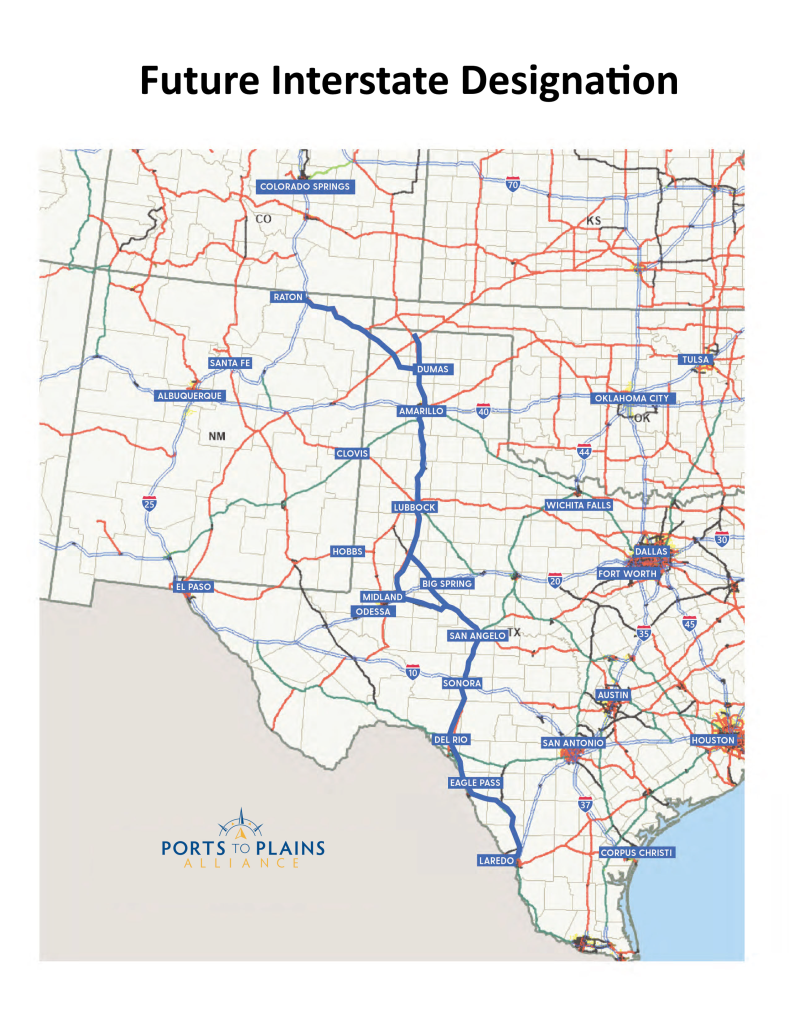
The 2022 Future Interstate designation, secured through the Consolidated Appropriations Act of 2023, represents the single most important policy victory in the history of the Ports-to-Plains Alliance. This landmark action formally designated the Texas and New Mexico portions of the Ports-to-Plains Corridor as a Future Interstate, establishing and protecting a nationally significant corridor for long-term federal recognition and funding. Spanning from Laredo, Texas, to Raton, New Mexico, the designation affirmed the corridor’s role in freight mobility, rural connectivity, and North American trade. Just as importantly, it safeguarded the route for future investment — ensuring continuity across states and aligning federal policy with national economic priorities. With designation secured, the next critical step was advancing the I-27 Numbering Act, which will formally assign Interstate numbers and unlock the full range of federal funding tools needed to move I-27 from designation to construction as a true future interstate in Texas and New Mexico.
Official Segment Breakdown
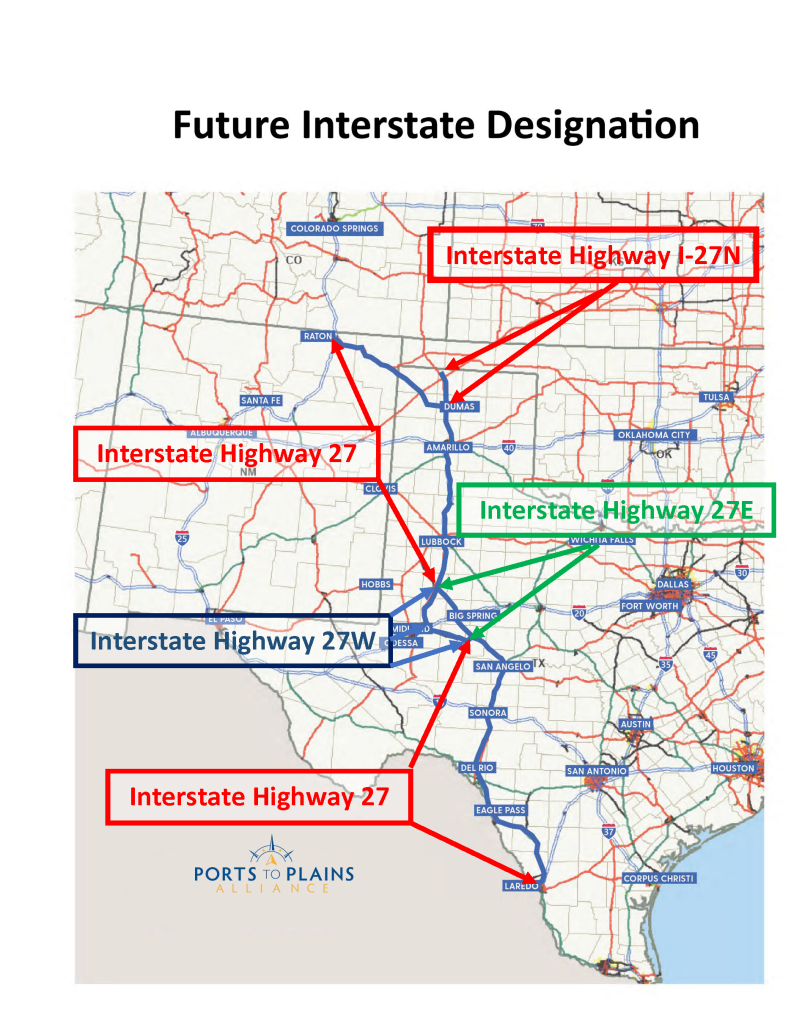
The I-27 Numbering Act of organized into defined segments the Future Interstate I-27 corridor is covering the I-27 mainline from Laredo to Raton and the I-27 East, West, and North routes along U.S. 87, U.S. 277, U.S. 287, SH 158, I-20, and SH 349.
Next Steps: Expansion of Numbering and Implementation
With the Future Interstate designation and numbering secured in Texas and New Mexico, attention now turns to extending numbering and implementation across the remaining seven corridor states. The I-27 Numbering Act of 2026 is the critical legislative step to formally assign Interstate numbers and authorize official signage — unlocking full federal funding eligibility nationwide. Central to this effort is the Interstate Feasibility Study, Proposal which provides the seven states with a shared, data-driven framework evaluating connectivity, costs, safety, freight demand, and economic impacts. This unified analysis enables coordinated planning, supports federal eligibility, and ensures consistent standards — positioning each state to advance I-27 from designation and route numbering to deliverable interstate investment.
Advocate for Formula Inclusion
Now is the time to act. Urge your Members of Congress — especially those serving on transportation and appropriations committees — to support inclusion of the Future Interstate Feasibility Study and the I-27 Numbering Act of 2026 in the next federal Surface Transportation Authorization bill. At the same time, encourage local communities, state legislators, and state DOTs to align their priorities and formally support I-27 implementation. Coordinated advocacy at the local, state, and federal levels is essential to securing dedicated funding and accelerating delivery across all corridor states.